Current
White Collar War Criminals
Who comes to mind when you think of a war criminal?
For many people in the United States, the image that springs forth is that of a war lord, a dictator – or even a democratically elected President. But none of these people could commit mass atrocities on their own. To commit mass atrocities, you need help. And a lot of it.
From the slave trade and colonialism onwards, corporations have been enablers of atrocities. White Collar War Criminals narrates the history of corporate enabling into the present day, where BigTech companies can launch products that help perpetrators unleash devastation at scale, while the boardrooms of Silicon Valley remain largely invisible in the public accounting of mass violence. But there is a pathway to changing this narrative; history does not need to keep repeating.
White Collar War Criminals is the story of tenacious survivors and their non-profit lawyers who have spent years fighting to hold these companies to account. It shows how, contrary to the belief of many, there are plenty of tools available to bring corporate enablers to justice. The missing ingredient, however, is political will – something that cannot be built until the public has a better understanding of how the crimes that horrify us, actually take place. To that end, White Collar War Criminals works to expand the public narrative about who is responsible for mass atrocities.
My Parents Never Met
What makes us who we are — nature or nurture? What makes a family — biology or shared experience? These universal questions are at the heart of Rebecca Hamilton’s memoir, My Parents Never Met.
—
I was conceived with the use of an anonymous sperm donor. The product of a secret program run out of a research facility in Aotearoa, New Zealand, no records were ever created to document the truth of my conception. In the United States today, many parents continue to select anonymous donors, instead of identifiable ones, to build their families. That is their choice and, for all the reasons that emerge through this memoir, I believe it is an unwise one. But my parents were not given a choice: If they wanted a child, they had to accept never being able to know where half of that child’s DNA came from. They took that deal, but in defiance of the program’s rules, they told me I was donor conceived. They also told me that their desire to raise me was what mattered; their love would make a family, regardless of biology.
When I was nine, my mother was hit by a life-threatening disease. A few weeks later, my dad died. Clinging to the emotional scaffolding of my origin story, I spent the rest of my childhood trying to belong to other people’s families. If love was all that mattered, then biology was irrelevant; anyone who I could get to love me, could raise me.
It wasn’t until years later, after having immigrated to the United States and had children of my own, that a combination of online DNA testing, census scouring, and social media sleuthing, finally revealed the truth about my genetic inheritance. In that moment, my life story, developed across the course of the book – an incomprehensible one in which I start out as a high school dropout, encouraged by my foster family to re-enter the education system, and end up with a scholarship to Harvard Law School, serve on the team prosecuting genocide cases at the International Criminal Court, work as a foreign correspondent for The Washington Post, and become a tenured U.S. law professor – becomes instantly predictable, even prosaic.
My Parents Never Met explores the fluid boundaries between nature and nurture, and what happens when the people who raise us are unable to answer the questions we carry. Set against the backdrop of a world increasingly shaped by online DNA testing and identity discovery, my search is at once personal and universal. Blending intimate narrative with the urgency of a detective story, My Parents Never Met is for anyone who has wondered whether knowing where you come from, might help you figure out who you are.
Past Projects
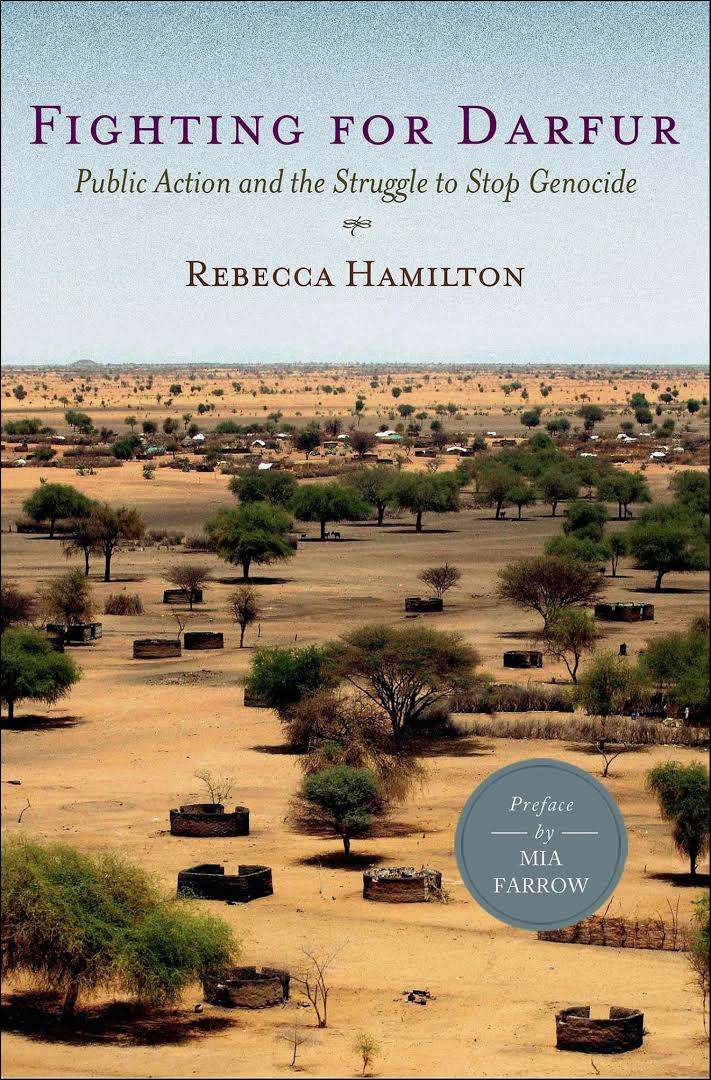
Fighting for Darfur: Public Action and the Struggle to Stop Genocide
Rebecca Hamilton passionately narrates a six-year long grassroots campaign to draw global attention to the plight of Darfur’s people. From college students who galvanized entire university campuses in the belief that their outcry could save millions of Darfuris still at risk, to the celebrities who spurred politicians to act, Hamilton details how advocacy for Darfur was an exuberant, multibillion-dollar effort. She then does what no one has done to date: she takes us into the corridors of power and the camps of Darfur, and reveals the impact of ordinary people’s fierce determination to uphold the mantra of “never again.” Drawing on over 200 interviews with survivors of genocide, citizen activists, and policymakers from U.S. Secretary of State, Colin Powell, and UN Secretary General, Kofi Annan to Arab League Secretary General, Amr Moussa, Fighting for Darfur weaves a gripping story that both dramatizes our moral dilemma and shows the promise and perils of citizen engagement in a new era of global connectivity.